
JPMorgan, Copilot and Oscars
March 15, 2026
March is always a good gauge of how a year is going, and at mogul I’m glad it’s going as well as it is. Our supply team continues to do an incredible job of bringing more properties to the table for you guys, and it’s always a thrill when we launch something in a new market.
While I can’t spoil anything that’s to come, I can safely say you don’t want to miss what we have planned over the next few weeks.
Anyway, that’s enough from me. Let’s get into it.
- Alex Blackwood
A very unique train

🧠 Microsoft Unveils AI Health Tool That Can Read Medical Records and Offer Guidance: Microsoft has introduced Copilot Health, an AI feature that can analyze a user’s medical records, lab results, medications, and wearable-device data to provide personalized health insights and advice. The tool connects to data from more than 50,000 healthcare providers and multiple wearable platforms, helping users understand test results, track chronic conditions, and prepare questions for doctors. Microsoft says the system uses encrypted data environments and strict access controls, positioning the tool as a digital health assistant that explains medical information rather than replacing professional medical care.
🚗 Tesla’s China Sales Rise Early in 2026 While BYD Slips: Tesla saw stronger sales momentum in China during the first two months of 2026, helped by increased deliveries from its Shanghai factory, while rival BYD reported a notable drop in electric-vehicle sales. Industry data shows Tesla’s China output and deliveries rebounded after earlier factory upgrades, while BYD’s EV sales declined sharply amid intensifying competition and softer demand in the broader Chinese EV market.
🚆 24-Hour Train Between Beijing and Pyongyang Returns: A long-dormant international rail route linking Beijing and Pyongyang is set to resume service, restoring a roughly 24-hour journey between the two capitals. The cross-border train, suspended for years amid pandemic restrictions and tightened borders, is seen as another sign of warming travel and economic ties between China and North Korea, while offering one of the few overland routes connecting the isolated state to the outside world.
JPMorgan Slashes Loan Marks

This week, the $2 trillion private credit market collided with reality. What began as whispers of overvaluation has erupted into a credibility test for some of the biggest names in alternative assets.
Blue Owl Capital and JPMorgan Chase are at the center of this storm, triggering shockwaves across Wall Street that signal the era of unquestioned private valuations is likely over.
Glendon Calls Out Blue Owl
The panic accelerated when investment firm Glendon Capital Management publicly accused Blue Owl of obscuring weaknesses in its loan portfolios. Glendon argued that private credit lenders are sitting on far larger losses than they disclose, pointing specifically to the Blue Owl Capital Corporation fund. Glendon noted that the firm's recent valuations on certain loans were significantly higher than the current public trading prices for identical corporate debt. Blue Owl fiercely defended its position by citing a recent $1.4 billion loan sale priced at 99.7 cents on the dollar, but the market reaction was swift, sending Blue Owl's stock tumbling.
JPMorgan Pulls the Reins
While Blue Owl fought a public relations battle, JPMorgan quietly executed a systemic risk adjustment. The bank marked down the value of certain private credit loans that serve as collateral for financing, specifically targeting debt tied to software companies. By marking down this collateral, JPMorgan is actively tightening the "back leverage" it provides to private credit firms. This reduces borrowing capacity as a preemptive measure to enforce financial discipline before a broader crisis materializes.
The Illusion of Stability
For years, private credit seduced investors with the promise of reliable income and immunity from the wild swings of public equities. This week's developments expose a severe structural vulnerability. When a dominant institution like JPMorgan unilaterally reduces collateral valuations, it shatters the illusion of stability. It suggests that the lofty marks managers applied to their portfolios just months ago no longer reflect current economic reality.
Why This Matters
The cracks in private credit represent a fundamental shift in market liquidity. As banks pull back leverage and funds cap withdrawals, the cost of capital for mid-sized businesses is guaranteed to rise. The days of accepting private credit valuations at face value are gone, making absolute transparency a competitive necessity for fund managers. Moving forward, portfolios heavy on tech and software debt will face the harshest audits from institutional capital. Interesting times lie ahead…
The Bosworth Is Heating Up
-01KKREN5DXCRAWVZ5159HB3HT7.png&w=1920&q=75)
Over $173,000 has already been raised for The Bosworth, a single-family rental investment located in Broken Bow. The 4,566-square-foot property features 7 bedrooms and 8 bathrooms, offering a spacious layout designed to accommodate large groups and maximize short-term rental income in one of Oklahoma’s most popular vacation destinations. Known for its cabins, outdoor recreation, and growing tourism industry, Broken Bow continues to see strong demand for well-located short-term rental properties.
Underwritten with an average yield of 11.5% and a projected 12.3% annual IRR, this offering targets approximately $1,278,871 in total profit over the hold period. With a total equity offering of $556,250 and an overall investment amount of about $1,037,405. The Bosworth provides investors with exposure to a cash-flow-focused vacation rental opportunity in a high-demand leisure market.
Secure your allocation while availability remains.
- A suspect has been charged with attempted murder after allegedly firing multiple shots at Rihanna’s home in Los Angeles while she, A$AP Rocky, their children, and family members were on the property. Authorities say several rounds were fired at the residence and a nearby home before the suspect fled. No one was injured, but prosecutors have filed multiple felony charges related to the shooting.
- Major auctions of fine art and collectible cars generated more than $600 million in sales, showing the resilience of ultra-wealthy buyers even as geopolitical tensions rise over the conflict involving Iran. High-end collectors continued bidding on rare paintings and vintage automobiles at top auction houses, underscoring how luxury assets often remain strong during global uncertainty as wealthy investors treat them as both passion purchases and alternative stores of value.
- Organizers of the Academy Awards have increased security measures around the ceremony in Los Angeles after U.S. officials circulated an alert about a possible Iranian drone threat targeting California. Federal and local authorities, including the Federal Bureau of Investigation and Los Angeles Police Department, are coordinating with event organizers to tighten surveillance, deploy additional officers, and secure the area around the Dolby Theatre. Officials say there is currently no confirmed or imminent threat, but precautions have been heightened due to tensions involving Iran and the U.S.
Misery by Stephen King
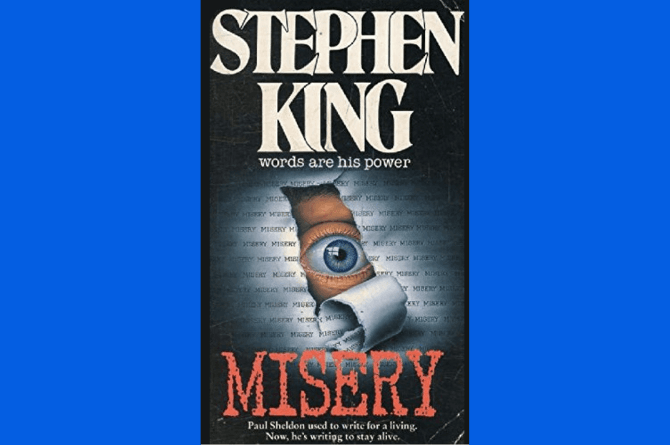
It’s been a while since I last reviewed a Stephen King book, so I figured I’d jump back in with Misery. This one is tight, intense, and addictive from the start. The setup is simple but terrifying: a famous author gets injured, wakes up in a stranger’s house, and realizes pretty quickly that “being rescued” isn’t the same as being safe.
It’s basically a pressure cooker of a story: just a few characters, one isolated setting, and nonstop psychological tension. Annie Wilkes is an all-time unsettling villain. She’s simply terrifying.
Even though it’s not King’s biggest or most supernatural book, it might be one of his most memorable. It’s the kind of thriller where the dread builds page by page, and you keep reading because you have to know how it could end. As always, Stephen King delivers…yet again.
⭐ 4.79 / 5.0 in my book (no pun intended)
Guess where from, answers below

- “You drown not by falling in the river but by staying submerged in it.”
- "The past shouldn’t be feared for it guides our future.”
- "I have magic hair that glows when I sing."
The first website is still online.
World Wide Web Project, created by Tim Berners-Lee in 1991, can still be visited today. Proper vintage.
Become a More Informed Investor
Receive this weekly recap when you sign up for our platform
Sign Up Today