
Meta, Amazon, and Saks
January 18, 2026
Things at mogul have been moving at a million miles an hour to start 2026. This week alone, three sellouts even forced us to move a property launch up for the first time. It’s a testament not just to the strength of the product we have, but to our team’s ability to lock in top-tier supply on such short notice.
Anyway, that’s enough from me. There’s a lot to cover this week, so let’s get into it.
- Alex Blackwood
Billions lost as Meta reins in Reality Labs
🔌 Amazon to Buy America’s First New Domestic Copper Output in More Than a Decade — Amazon Web Services (AWS) has signed a two-year agreement with mining giant Rio Tinto to purchase copper produced at the Johnson Camp mine in Arizona, marking the first new U.S. copper output in over ten years thanks to Rio Tinto’s innovative Nuton bioleaching technology. The low-carbon copper will go into components for AWS’s U.S. data centers, securing key materials for wiring, transformers, and other infrastructure as AI and cloud demand surge, while Amazon provides cloud data and analytics support to optimize the new extraction process.
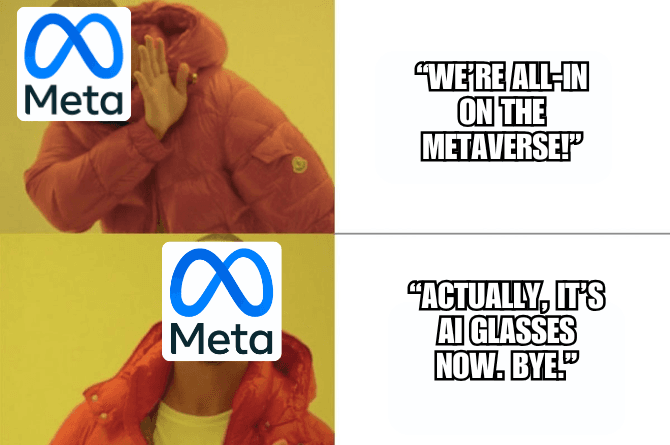
📉 Meta Lays Off 1,500 People in Metaverse Division as Focus Shifts to AI and Wearables — Meta Platforms has cut about 1,500 jobs (roughly 10% of its Reality Labs division), the unit responsible for its virtual and augmented reality/metaverse efforts. Reality Labs had been a major investment for Meta, and the layoffs reflect a pullback from costly virtual world ambitions in favor of technologies with stronger consumer demand and clearer revenue potential. It is also a massive failure for Meta, who was losing billions of dollars a year on this side of the business.
🚀 Astronauts Return to Earth After First‑Ever Medical Evacuation From Space Station — A crew returning from the International Space Station (ISS) touched down safely following the first medical evacuation in the station’s history, after a crew member required urgent care that couldn’t be provided on orbit. Not going to lie, this is really damn cool and got me thinking about a potential return of the space race quite a bit afterwards
The Gilded Collapse for Saks Global

The high end retail world was rocked by major news earlier this week: Saks Global, the parent company of Saks Fifth Avenue, Neiman Marcus, and Bergdorf Goodman, has officially filed for Chapter 11 bankruptcy protection. The filing, made in a Texas court, marks the most significant retail collapse since the pandemic. For over a century, these brands defined the pinnacle of American luxury, but they are now buried under a mountain of debt estimated between $3.4 billion and $5 billion. Despite the prestige of the names on the door, the business had become a melting ice cube, struggling with plunging sales and a critical lack of cash flow that made the bankruptcy filing almost inevitable.
The Debt Trap
The root of the crisis traces back to the ambitious $2.65 billion merger between Saks and Neiman Marcus in late 2024. The goal was to create a luxury powerhouse that could cut costs and dominate the high end market. Instead, the merger provided the new entity with massive debt just as the luxury market began to cool.
Saks Global missed a massive $100 million interest payment at the end of last year, triggering a default. Analysts point out that the merger was built on aggressive growth assumptions that ignored a harsh reality: department stores are no longer the exclusive gatekeepers of luxury and the rise of ecommerce has changed the landscape forever. By doubling down on a shrinking physical retail model with borrowed billions, Saks effectively tied its own hands and was on a path towards the inevitable.
The Vendor Fallout
Some could argue the most damaging blow to the business wasn't just the debt, but the deteriorating relationships with the brands themselves. Saks Global reportedly fell months behind on payments to luxury icons like Chanel, Kering (Gucci), and LVMH, owing them tens of millions in unpaid invoices. In retaliation, many of these anchor brands slowed or stopped shipments entirely, leading to noticeably thinner inventory during the critical 2025 holiday season.
This created a death spiral, where empty shelves drove away high spending customers, causing revenue to drop even further, in turn making it even harder to pay the bills. Ironic, right? The bankruptcy filing includes a $1.75 billion financing package intended to resume these payments, but the damage might already be done at this point.
A Leadership Pivot
In a desperate bid for a fresh start, Saks Global has cleared out its previous leadership team. Geoffroy van Raemdonck, the former CEO of Neiman Marcus, has been tapped to lead the restructuring as the new Chief Executive, replacing the architects of the failed merger. While the company insists that its roughly 200 stores will remain open for now, a major operational footprint evaluation is underway. It’s safe to say we should expect quite a few closures, which I would imagine will lead to a leaner and more digital-first entity that can compete in today’s landscape.
The Dolly is approaching a sellout
_01KEJ9RVSBYAMJDTBQ3W4A4SVB.png&w=1920&q=75)
The Dolly is a luxury sTR built in 2020 and located in Gatlinburg, TN, one of the most durable and high-performing STR markets in the U.S. The property is just a 15 minute drive from Dollywood, which attracts more than 3 million visitors annually.
Gatlinburg also serves as the main entry point to Great Smoky Mountains National Park, the most visited national park in the country, drawing roughly 12.2 million visitors in 2024 alone. Those visitors generated over $2 billion in nearby spending, contributing more than $2.8 billion in total economic impact.
Spanning over 4,700 square feet, the home offers 6 bedrooms and 8 bathrooms, an indoor pool, a private theater room, and accommodations for up to 40 guests. It is located within the STR-approved Sherwood Forest Resort HOA, a gated community with landscaped grounds and a shared pool for guests.
The Dolly has a strong operating track record, with 2024 and 2025 revenue already surpassing its initial Year 1 projections. The current property management team is expected to stay on, ensuring a smooth transition. For investors seeking a proven, high-end Airbnb in a top tier vacation destination, this property presents a compelling opportunity.
- A group of former Federal Reserve and Treasury officials criticized the Justice Department’s ongoing investigation into current Fed Chair Jerome Powell, saying the legal action threatens the central bank’s long-held independence. They argue that subjecting the Fed’s policy decisions and leaders to criminal scrutiny risks politicizing monetary policy, undermining confidence in the central bank’s ability to manage inflation and economic stability. I think we’re very far away from a resolution between this Powell and President Trump drama…
- Spotify has increased the cost of its premium subscription in the U.S., just months after its previous rate hike, citing rising content and licensing costs. The new pricing affects individual, student, and family plans, making Spotify one of the priciest mainstream music streaming services in the U.S. The move comes as the company continues to invest in podcasts, AI-driven recommendations, and exclusive content to retain subscribers, who in turn need to keep paying more money every few months it seems.
- Authorities have charged 20 individuals in connection with a sweeping scheme to manipulate the outcomes of basketball games, including college and professional matches. Investigators say the conspiracy involved players, coaches, and gamblers, and was tied to illegal sports betting operations. This is a story that keeps developing, especially following the arrests last year of massive names like Chauncey Billups.
The Food Lab by J. Kenji Lopez-Alt
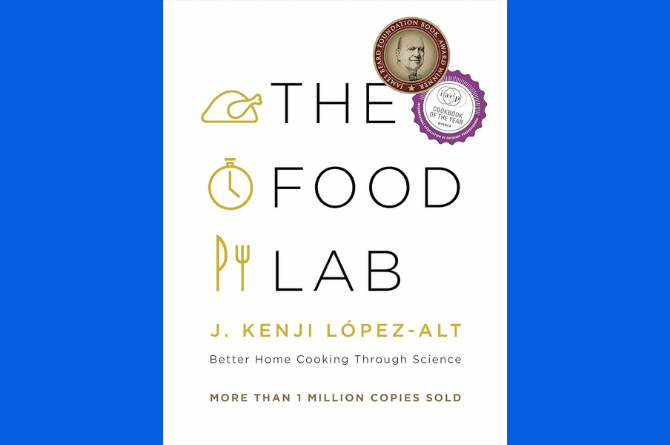
The Food Lab is one of the rare kitchen bibles that actually earns the label. It’s part cookbook and part science class, perfect for complete beginners or for experienced cooks. Instead of asking you to follow rules blindly, it shows you why stuff works in the kitchen and how to get consistently excellent results without needing a professional set up.
The best thing about the book is how practical it all is. Kenji is just great. He breaks down the mechanics behind everyday staples, then turns that into repeatable methods you can use immediately for dinner that night. It couldn’t be further from traditional cookbooks.
If you cook even semi-regularly, The Food Lab pays for itself with better meals, fewer disappointments, and a fascinating read from cover to cover way beyond the recipes.
⭐ 4.84 / 5.0 in my book (no pun intended)
Guess where from, answers below

- "Life moves pretty fast. If you don't stop and look around once in a while, you could miss it."
- "Hate is baggage. Life is too short to be pissed off all the time. It's just not worth it."
- "The difference between genius and insanity is measured by success"
There’s a lizard that shoots blood from its eyes
The horned lizard uses this as a defense mechanism to scare off predators. I for one would not blame the predators one bit to be scared off by this one.
Been a while since I did a 007 marathon
- Ferris Bueller's Day Off (Ferris)
- American History X (Danny Vinyard)
- Tomorrow Never Dies (Eliot Carver)
Become a More Informed Investor
Receive this weekly recap when you sign up for our platform
Sign Up Today