
🚨 Multiverse, Kanye, & Bikes
December 15, 2024
Good afternoon. Last week, we received a flurry of OOO or slow response warnings after sending out the newsletter, so this will be the last long-form newsletter heading into the new year. We will continue to send more streamlined, fun newsletters through the remainder of the year and will pick back up in full force on January 12th!
In our deep dive section, you may notice more of a deep dive into the breakthroughs in modern science than is typical of a business-oriented newsletter, and this may be due to the fact that I went down a rabbit hole and everyone I talked to did not find it nearly as interesting as I did. If you are like them, feel free to skip over, but this may be one of the most significant breakthroughs ever and could reshape life as we know it… or at least I think so.
- Alex Blackwood
Kim & Kanye of the grocery industry

🪟 Glass case of emotion - On Wednesday, November’s inflation report came in and made us all feel like we were in a glass case of emotion. The bad news is inflation ramped up to 2.7% annually (0.3% increase from October) and was the highest month-over-month increase in a year and a half. The good news is analysts were expecting the increase. The 2.7% is above the 2.0% annual inflation target of the Fed, but even with the increase, analysts estimate a near 100% likelihood of a quarter-point interest rate cut at the December 18th Fed meeting.
🛒 The Kim & Kanye of the Grocery industry - In a case of former merger partners turned bitter rivals, Albertsons is suing Kroger. On Tuesday, a US District Judge sided with the FTC that a $20 billion merger between two giant grocery-store operators, Albertsons and Kroger, would lead to a near monopoly over the grocery industry and reduction in competition, which would ultimately hurt consumers. On Wednesday, just one day later, Albertsons turned face and sued Kroger, accusing Kroger of not putting the work in not doing enough to win approval for the $20 billion deal.
🥊 DOGE looks to deal first blow - We didn’t say the new Department of Government Efficiency (DOGE) wouldn’t be contentious. In recent interviews, the DOGE team has been exploring the shut down of the FDIC. Considered one of the top watchdogs of the banking industry, the FDIC is seen by the DOGE as duplicative to other bank regulators like the OCC and parts of the Fed. They would look to fold the deposit insurance into the Treasury Department to streamline the industry. While not set in stone, this type of thinking is the kind of change the DOGE team is trying to accomplish.
When you thought Marvel had overdone multiverses, here comes Google
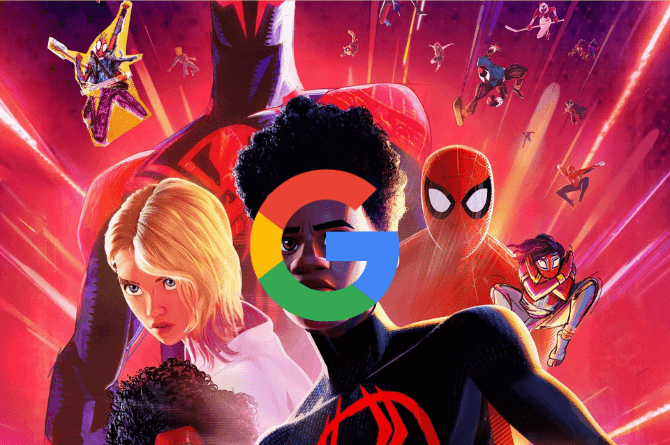
On Monday, the Google Quantum AI team unveiled a significant breakthrough in quantum computing with their Willow chip. The high level overview is that the chip performed a computation 5 minutes that would have taken the world’s next fastest supercomputer 10 septillion years… Written out that is: 10,000,000,000,000,000,000,000,000 years
✈️ High level, what is quantum computing?
Quantum computing is a field of computer science that leverages principles found in quantum mechanics to solve problems faster than traditional computers.
❓Okay, so what the heck does that mean?
In traditional computers, a bit is the smallest unit of data that a computer can store and process. A bit is the building blocks of the computer and is represented as a 0 or 1. The 0 or 1 are representative of an “on/off” switch that changes state between 0 or 1 when electricity is flowing or not flowing in certain areas of a computer chip. From the 0 or 1, the computer can translate the sequences of them to mean an ‘a’ for instance.
🖥️ So, how does quantum computing differ?
Previously, the data could only hold the state 0 or 1 in a bit. In quantum computing, the computer leverages quantum bits or qubit, which are much smaller than bits and can exist as both a 0 and 1 at the same time.
The ability for qubits to exist in multiple states at once creates the ability for quantum computers to explore many possibilities at once, leading to faster calculations for certain problems. Additionally, when multiple qubits are linked it creates entanglement where one qubit instantly affects the state of others, which further enhances computational power.
🤓 What was the breakthrough at Google?
Because qubits rapidly exchange information, errors present one of the greatest challenges to quantum computing. When qubits share errors, it makes it more difficult to complete computations, which leads to more errors that spread throughout the qubits. Previously, the more qubits you used, the more errors occurred, and the more the system became classical in nature.
The breakthrough was an error correction system that actually reduced errors when more qubits were added. This is the first time a team has been able to drive down errors and scale up qubits, which led to the computational breakthrough.
🚀 Why does this matter?
While solving complex math problems is cool, think about the applications of this type of technology:
- Drug discovery - being able to study molecular interactions and design new drugs more efficiently
- Materials science - developing new materials by modeling atomic structures
- AI - accelerating machine learning by processing massive data sets faster
- And many more...
🟰 Conclusion:
While this is a tremendous breakthrough, we are still years away from commercial application, and the current state of quantum computing means it won’t be commercially viable to scale. Because of the costs, the environment of the labs, and the highly specialized infrastructure necessary to house a quantum computer, we won’t be using them directly anytime soon if ever. But the implications of this device on other fields of science are astounding.
Even crazier, the scientists behind the breakthrough point to the chip as evidence of multiple parallel universes or multiverse. He makes the argument that the computing power is too much for one universe and must be borrowed from others.
Anyways, pretty crazy stuff, and I wanted to do a deep dive because it wasn’t getting enough air time in my opinion.
- As a startup, how do you compete with the tech giants around you who can outpay and outgun you at every turn? You offer a mission statement, equity in the company, and undeniable benefits. What happens when you grow out of your startup phase? You begin to shift what you can offer and turn the faucet off on major benefits to enhance profits for shareholders. That is what is happening at Netflix now. They previously offered unlimited parental leave in the year the baby is born, now they are advised to take up to 6 months.
- He wasn’t even that good anyway… That is me as a Yankees fan responding to losing one of the top talents in the game, Juan Soto, to the cross city rivals, the New York Mets. Earlier this week, Soto inked a $765 million dollar contract, which is the largest professional contract in sports history. The Mets were bought relatively recently by billionaire hedge fund manager, Stevie Cohen, who is on a mission to return the Mets to glory. I can’t be mad, buying players is kind of the Yankee playbook, so Cohen is just playing the game.
- What would our newsletter be without at least one reference to Elon Musk? On the heels of the funding round valuing his rocket company, SpaceX, at $350 billion (the largest privately held company in the world), Elon Musk has done the previously unthinkable of crossing the $400 billion net worth threshold. To give you a picture of how wealthy that is, he is now worth more than Costco and $200 billion more than the next richest person in the world, Jeff Bezos.
- With one month left in his term, Biden threw out a curveball by announcing the largest single day of clemency in modern U.S. history. He is commuting the sentence of 1,500 people and pardoning 39 others. Commuting a sentence is a fancy way of saying he is reducing their sentence.
For all the statistic nerds out there, this one is for you. Imagine a world where you could use probabilities from past events to predict future events with a certain degree of confidence. Now, imagine you predict the future and see the entire galaxy will fall into chaos, but you have the power to maneuver the period and shorten it substantially by setting up a “Foundation” on the other end of the galaxy to shepherd the galaxy through the dark times.
That is the premise of the Foundation series, and there is a reason why this is on every sci-fi lover or tech moguls must-read book lists. I’ll admit I wasn’t fully into sci-fi prior to this series, but after reading the 1st one in the series, I rush-ordered the remaining 6. Even if you don’t like sci-fi, give the first one a shot, and see if that changes your mind.
⭐ 4.85 / 5.0 in my book (no pun intended)
Guess where from, answers below
- “What’s the point of having F you money, if you never say ‘F you.'”
- “BIKES!”
- “Do you like apples? Well, I gawt her numbah. How do you like them apples?”
- On the word “lover” - “That word bums me out unless it’s between the words meat and pizza.”
This one blew my mind
There are no penguins at the North Pole. Only Santa.
- Billions (Bobby Axelrod)
- Mostly Stories (Tom Segura)
- Good Will Hunting (Matt Damon)
- 30 Rock (Liz Lemon)
Become a More Informed Investor
Receive this weekly recap when you sign up for our platform
Sign Up Today