
NASA, Amazon lawsuit, and the AI triangle
September 28, 2025
Ryder Cup week is just great. Some top tier golf, rowdy crowds, and most importantly, two new launches for us. A big week for golf, but an even bigger one for mogul.
It’s hard to even take a breather at the moment, but I wouldn’t have it any other way.
Let’s get into it.
- Alex Blackwood
The space race is back

🚀 NASA Artemis II preps for lunar return - NASA is officially targeting February 2026 for the historic Artemis II mission, which will send astronauts around the Moon for the first time in over 50 years. The 10-day flight, led by Americans Reid Wiseman, Victor Glover, Christina Koch, and Canadian Jeremy Hansen, won’t land but marks a major leap beyond low Earth orbit. This sets the stage for future lunar landings and Mars ambitions. Technical hurdles remain, but success could reignite interest and investment for deep space exploration and the growing commercial space sector. The space race is back, and I for one cannot wait.
🛂 $100,000 fee for new H-1B visas sets off alarm bells - Last week, President Trump’s administration imposed a new $100,000 fee on each new H-1B visa petition filed for workers outside the U.S., starting September 21, 2025. This hefty one-time charge stacks on top of existing application costs and isn’t required for renewals or current visa holders. U.S. employers are scrambling to work out the impact and global talent markets are watching nervously.
💍 Oura scores its unicorn moment - Finland’s Oura Health, maker of the increasingly popular smart ring, just pulled in $875 million in Series E funding for a new valuation of $10.9 billion. Oura has sold over 3 million rings in the past year, with annual revenue crossing the $1 billion mark. The company plans to ramp up production, push into more retail, and expand its health tracking tech even further. If Frodo wore one of these, Lord of the Rings might look very different.
OpenAI, Nvidia, Oracle’s wild shuffle
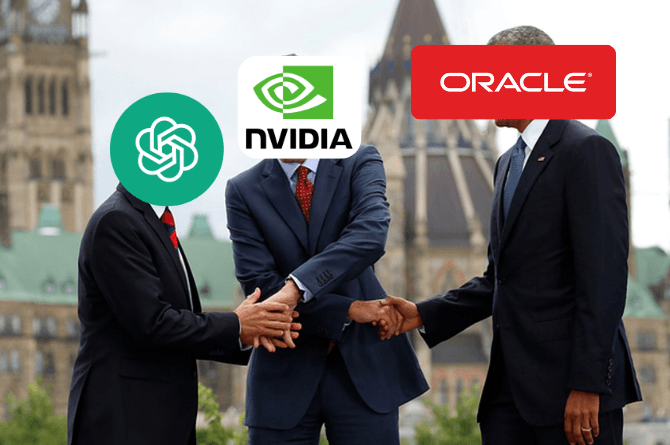
This week, the hottest topic in tech isn’t just another partnership; it's a game-changing triangle between OpenAI, Nvidia, and Oracle, with money flying in all directions and the ambitions for AI infrastructure charting new territory.
Nvidia’s $100 Billion Bet on OpenAI
In one of the boldest moves in Silicon Valley history, Nvidia announced plans to invest up to $100 billion in OpenAI, mostly to supply data center chips for OpenAI’s next generation AI models. The partnership begins with non-voting equity stakes and staged funding kicks in as OpenAI scales up its infrastructure with millions of Nvidia GPUs. The anchor goal? At least 10 gigawatts of AI datacenters, enough computing muscle to power the kind of AI superintelligence Sam Altman keeps hinting about.
Despite the eye popping numbers, it’s not a one-off wire transfer, but a rolling letter of intent. Nvidia’s investment staggers in as each chunk of hardware is bought and deployed, and OpenAI uses those Nvidia chips to build out its vision. Most of the money, almost ironically, flows straight back to Nvidia in the form of hardware purchases: as one exec quipped, it’s like being paid to have your products used at next scale up.
Enter Oracle: The Third Corner in the Triangle
But the relationship doesn’t end there. Oracle, fresh off its own headline-grabbing $300 billion OpenAI cloud contract, is the critical infrastructure provider. Oracle will supply OpenAI with $300 billion worth of cloud computing over five years, beginning in 2027. That deal, which we discussed last week and briefly sent Larry Ellison rocketing past Elon Musk as the world’s richest person, instantly positioned Oracle not just as a cloud giant, but as the indispensable power grid for OpenAI’s ambitions.
Here’s where things get wild: Oracle will need to purchase roughly $40 billion dollars of Nvidia hardware just for OpenAI’s initial US data center buildout. Never before has so much cloud, hardware, and equity been stitched together in one sprawling triangle. Oracle buys the chips and builds the data centers; OpenAI fills them with its models; Nvidia profits many times over and invests back into the ecosystem that props up both.
Microsoft’s Ghost and the AI Cloud Wars
OpenAI’s pivot from exclusive partnership with Microsoft to leveraging Oracle, Nvidia, and global partners continues to reshape the industry. Microsoft retains a deep stake in OpenAI (around 30% ownership) and remains a preferred cloud partner for some regions/products. But now, OpenAI is setting up parallel tracks, and both Oracle and Nvidia are leaning in hard. Microsoft, meanwhile, is hedging its bets, publicly multicloud and offering competing models from Meta, Anthropic, and others across Azure.
The upshot? AI research and application no longer revolves around a single corporate center; it’s a crossfire of massive partnerships, hardware dependencies, and mega investments. Each tech titan is both vendor and customer to the others, their fortunes and competitive positions intertwined in bizarre ways.
Why It Matters
This week’s billion dollar money shuffle illustrates how funding, supply chains, and operating power in AI are fusing into a global race. By making hardware, providing cloud, and pumping equity into clients like OpenAI, Nvidia and Oracle aren’t just suppliers; they’re shaping the technical and economic architecture underlying AI’s global deployment.
Industry analysts aren’t sure if this kind of closed loop ecosystem can last forever, especially given antitrust worries, hardware bottlenecks, and the sheer expense of power and chip supply. But for now, it’s the model: everyone gets a piece, everyone pays a piece, and the AI hype machine keeps growing.
The Scheffler continues to heat up

The Scheffler is in high demand, with over $75,000 already raised. Located in West Houston’s Mission West subdivision, this property offers nine bedrooms and three bathrooms, all fully furnished after a recent renovation in early 2024.
The home has shown robust cash flow and maintained steady occupancy since its upgrades, with the first year’s financial projections set conservatively below the strong numbers delivered in the past year. The Scheffler stands out for its fresh renovation, consistent track record, and easy access to the dynamic Westpark corridor, a hotspot for growth and modern living in Houston.
Investment Snapshot
- Purchase Price: $400,000
- Total Equity Offering Amount: $195,000
- Year 1 Yield (Pre-Growth): 9.5%
- Average Yield Over Hold: 14.9%
- Annual Levered IRR: 14.3%
- Levered Profit: $299,336
- Levered MOIC: 2.5x
Houston’s real estate market is experiencing rapid growth, with rising rental demand and PadSplit properties consistently achieving high occupancy and steady cash flow. Opportunities like The Scheffler don’t come around often, and with limited spots available, this is a rare moment to invest in a thriving market before allocations run out.
- Amazon has agreed to pay $2.5 billion to settle a landmark class action lawsuit and FTC case alleging it misled millions of customers into subscribing to Prime and made it intentionally difficult to cancel. As part of the settlement, $1 billion will go to the U.S. government and $1.5 billion will be distributed directly to affected Prime members, who can expect refunds of up to $51 each. Amazon will also change its subscription advertising and cancellation practices but denies any wrongdoing. Legal and consumer groups see this as a warning shot to tech giants over opaque subscription tactics, with hopes it will lead to clearer billing policies for everyone.
- President Trump has rolled out a fresh wave of tariffs set to take effect October 1. Imported pharmaceutical drugs will face a 100% tariff, kitchen cabinets and bathroom vanities 50%, upholstered furniture 30%, and heavy duty trucks 25%. Trump says the move is designed to protect U.S. manufacturers and bolster national security, warning that global companies could avoid tariffs by building new plants stateside. Looks like “Assembled in the USA” is about to make a very expensive comeback.
- HSBC and IBM announced the world’s first known use of quantum computing for real algorithmic trading. In a groundbreaking trial with production-scale data from the European corporate bond market, HSBC used IBM’s quantum and classical computers together to boost the probability of winning completed trades by up to 34% versus existing methods. The experiment signals that quantum computing is moving from theory into real financial markets, with global banks now betting on quantum computing as the future of complex trading and risk modeling.
Pep Confidential by Martí Perarnau

This one is for football fans and non-fans alike who want a real look behind one of the world’s great managers, not just a tactician, but a leader. Pep Confidential puts you next to Pep Guardiola for a full season during his time at Bayern Munich and shows how the work actually gets done: ideas, decisions, doubts, and standards, all in plain view.
Martí Perarnau’s access is the difference. You’re in training, meetings, and video sessions, watching roles get shaped and plans adjusted from match to match. It’s specific without turning into a lecture and a fascinating insight behind the curtains that we so rarely get to see as fans. You also catch the human side, something which Pep doesn’t often show; how he handles pushback, how he talks to staff and players, how he manages the weight of constant expectation.
This book is a great pick for anyone curious about what it’s really like inside a top football club, whether you’re a devoted fan or just interested in leadership and teamwork. You don’t have to know the ins and outs of the sport to appreciate the pressure and the preparation involved at this level. By the end, you’ll have a new appreciation for what makes top managers like Pep tick, and you might look at your next game (or even your next work project) a little differently.
⭐ 4.78 / 5.0 in my book (no pun intended)
Guess where from, answers below
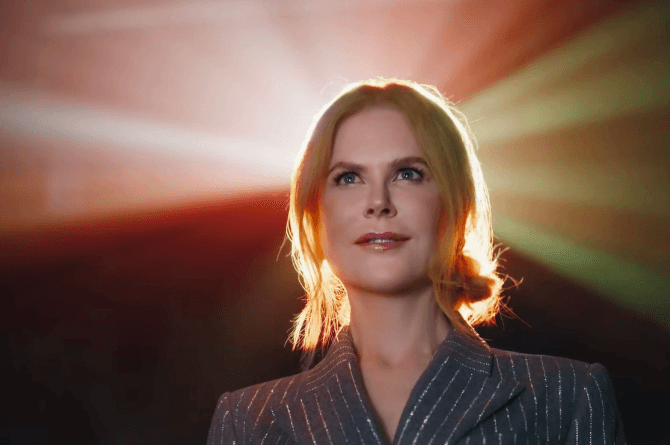
- “They’re here!”
- “I’ve got a jar of dirt!”
- “Eywa has heard you... Eywa has heard you!”
Bananas qualify as berries, but strawberries don’t
According to botanical definitions, a true berry develops from a single flower’s ovary and contains seeds within its flesh. That means fruits like bananas, kiwis, and even eggplants are considered real berries. On the other hand, strawberries and raspberries don’t fit this definition because they come from flowers with multiple ovaries and have seeds on the outside.
I was due a Pirates of the Caribbean rewatch
- Poltergeist (Carol)
- Pirates Of The Caribbean (Jack Sparrow)
- Avatar (Neytiri)
Become a More Informed Investor
Receive this weekly recap when you sign up for our platform
Sign Up Today