
Neo, Amazon, and Disney
March 8, 2026
The S&P 500 fell 1.3% on Friday, taking weekly losses to 2% for its worst week of the year so far, after slipping into negative territory for 2026 on Thursday and sitting about 1.5% below its end of 2025 level.
This kind of volatility is the backdrop for this week’s main story: with more investors looking to hard assets like residential real estate for durable returns and steadier cash flow when public markets get shaky like they have been.
Beyond this, there's also a lot to cover this week. Anyway, as always, that's enough from me. Let's get into it.
- Alex Blackwood
Apple’s new launches
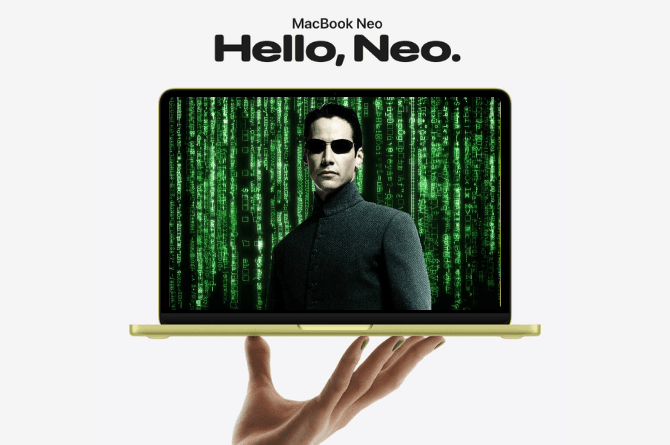
🍏 MacBook Neo and iPhone 17e Signal Apple’s New Strategy- Early impressions of the MacBook Neo and iPhone 17e suggest Apple is reviving a strategy focused on more affordable, colorful devices aimed at younger and budget-conscious buyers. The MacBook Neo starts around $599 and uses an iPhone-class chip to handle everyday tasks like browsing and streaming, while the iPhone 17e offers modest upgrades such as a faster chip and improved display while keeping a simpler camera setup. I for one am not upset.
🇺🇸 Anthropic vs Pentagon - Anthropic said it will fight in court after the Pentagon labeled the company a U.S. supply-chain threat, a designation usually aimed at foreign adversaries, in a dispute over how its AI can be used by the military. The clash appears to have escalated after Anthropic pushed for limits. This is another escalation in what is sure to be an ever-evolving saga that will surely have a lot more twists and turns.
🏥 Amazon Launches AI Platform to Automate Healthcare Administrative Tasks - Amazon has introduced an AI-powered system called Amazon Connect Health designed to handle time-consuming healthcare paperwork and operational work. The platform uses AI to automate tasks such as patient verification, appointment scheduling, reviewing medical histories, generating clinical documentation, and preparing billing codes, allowing clinicians to spend more time with patients instead of administrative work. This is most likely just the start of what will be a lot of innovations in the health care space through AI.
A PUSH FOR REAL ESTATE

The financial markets are experiencing a violent reality check this week, forcing investors to completely rethink where they park their capital. As the tech sector wrestles with AI driven restructuring and the broader stock market suffers from whiplash, we are witnessing a massive reallocation of wealth. Investors are aggressively moving their money out of volatile paper equities and finding safety in hard assets like residential real estate. This is not a temporary defensive posture but a fundamental flight to quality.
The Stock Market Reality Check
The opening days of March 2026 have been relentlessly punishing for equity investors. Following a brutal Thursday where the Dow Jones Industrial Average plummeted more than 900 points, the S&P 500 took another 1.3% hit on Friday to cap off a 2% loss for its worst week of the year. That final slide dragged the index entirely into negative territory for 2026, leaving it 1.5% lower than where it finished last year.
This downward volatility is being heavily fueled by surging oil prices and returning geopolitical jitters in the Middle East. Furthermore, independent research firms like Variant Perception have just activated tactical correction signals for the S&P 500 for the first time in nearly two years, warning clients to brace for weeks of prolonged uncertainty. The significance here is that the mega cap tech stocks that carried the market through 2025 are rapidly losing their momentum, leaving retail investors completely exposed to sudden algorithmic selloffs that can erase months of gains overnight.
The Flight to Real Estate
With equities showing severe cracks, capital is actively fleeing to the stability of residential real estate. Unlike tech stocks that can crater due to a single missed earnings report, single family rentals offer intrinsic physical value and consistent monthly cash flow. As inflation stabilizes and the Federal Reserve holds benchmark interest rates steady, the housing market has adapted to a highly predictable new normal. The significance is that a stabilized rate environment combined with high demand for housing creates the perfect conditions for steady property appreciation and reliable rental yields. Hard assets provide a defensive, inflation resistant moat that digital entries on a brokerage screen can’t match.
The mogul Club Solution
Historically, accessing high quality residential real estate required massive upfront capital and endless hours dealing with tenants. At mogul, we dismantle those traditional barriers by offering fractional ownership of premium single family rentals.Our platform allows you to buy digital shares of heavily vetted properties in high demand markets with incredibly accessible minimum investments. The significance for you is transformative. You get the rigorous due diligence of an institutional acquisitions team working on your behalf, allowing you to diversify away from stock market chaos and build wealth without any of the traditional landlord headaches during these highly volatile times.
Strong Demand for The Wade
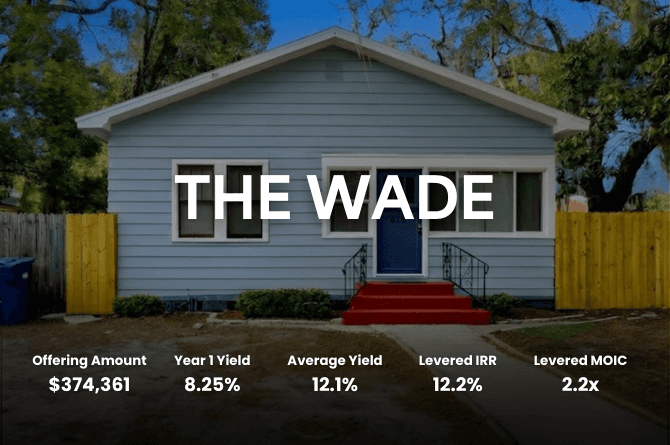
Over $70,000 has already been raised for The Wade, a single-family rental investment located in Tampa. The 3,187-square-foot property features 13 bedrooms and 4 bathrooms, offering a large layout designed to maximize rental income in one of Florida’s most dynamic housing markets. Tampa continues to benefit from strong population growth, job expansion, and steady rental demand, supporting long-term performance for well-positioned residential assets.
Underwritten with an average yield of 12.1% and a projected 12.2% annual IRR, this mogul offering targets approximately $456,365 in total profit over the hold period. With a total equity offering of $374,361, The Wade provides investors with exposure to a cash-flow-focused residential opportunity in a high-growth Sunbelt market.
Investors may wish to secure their allocation while availability remains.
- Kuwait has started cutting oil production at some fields because it is running out of storage for crude it can’t easily export, a sign that the disruption around the Strait of Hormuz is spilling into actual supply constraints. This is without a doubt a major concern with the ongoing Iran conflict and surely just the start of rising oil prices.
- Disney has introduced the Disney Adventure, its first cruise ship home-ported in Asia, marking a major push into the fast-growing Southeast Asian tourism market. Based in Singapore, the ship will run three- and four-night voyages designed as immersive vacations at sea, featuring themed areas inspired by Disney, Pixar, and Marvel franchises along with new shows, dining experiences, and attractions.
- Uber appears to be exploring a bigger push into driver and courier subscriptions, based on a new job posting seeking a product manager to build “net-new subscription packages” and lead global testing of the model. The company seems to be looking at subscriptions as a more serious growth lever, especially after smaller rivals have shown that offering drivers alternative pricing structures can work. Interesting to see where this one goes.
Shogun by James Clavell
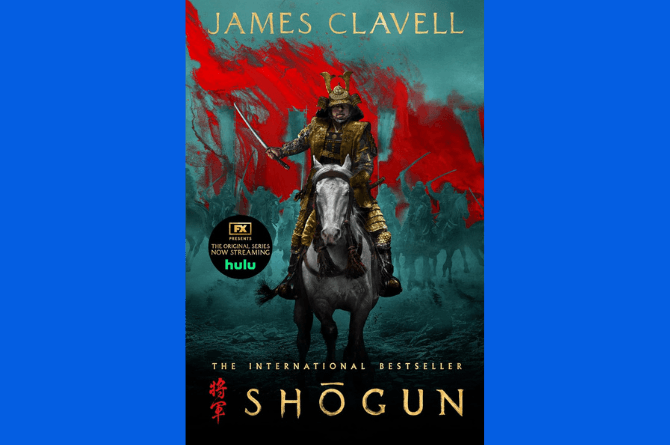
For only the second time ever, I’m repeating a book suggestion based off one of my first newsletters: Shogun. With the recent TV adaptation getting so much buzz, I decided to tackle the source material, James Clavell’s epic novel Shōgun. I read the complete edition (it’s usually split into two parts), and let me tell you, it’s a commitment… but one that pays off so well.
The story is set in feudal Japan around the year 1600 and follows John Blackthorne, an English ship pilot who finds himself shipwrecked and thrust into the complex political and cultural landscape of Japan on the brink of civil war.
Clavell’s research is immense, and the world he builds is incredibly immersive. You learn about samurai culture, intricate social hierarchies, and the political maneuvering that defined the era, all through Blackthorne’s eyes.
It’s a dense read, full of historical detail, political intrigue, cultural clashes, and yes, some epic battles. The TV show does a great job capturing the visual elements, but the book provides a depth of character and political understanding that’s hard to replicate on screen. If you have the time and enjoy historical epics, this is a masterpiece.
⭐ 4.85 / 5.0 in my book (no pun intended)
Guess where from, answers below

- "I don't like sand. It's coarse and rough and irritating and it gets everywhere."
- "I'm sorry, Wilson. Wilson, I'm sorry! I'm sorry! WILSON!"
- "Spartans! Ready your breakfast and eat hearty... For tonight, we dine in hell!"
A single cloud can weigh over a million kilograms.
Despite looking light and fluffy, large clouds hold an enormous amount of water. Bet you didn’t know that.
Become a More Informed Investor
Receive this weekly recap when you sign up for our platform
Sign Up Today