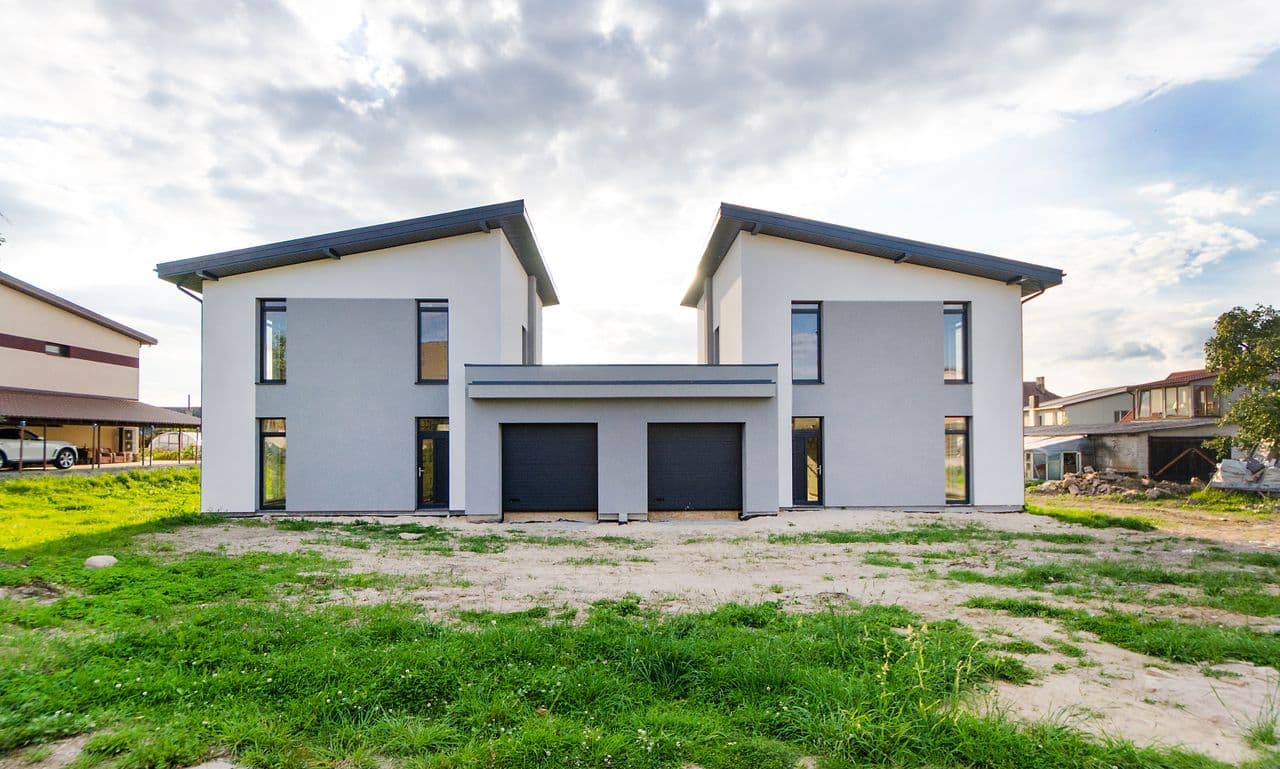
Duplex investing remains one of the most accessible ways to pursue wealth through real estate without the capital requirements of commercial properties. Secondary 2026 market guides estimate duplex acquisition prices from roughly $90,000 to $280,000 in selected markets, with advertised or modeled cap rates reaching the low teens in some Detroit scenarios. Current duplex sales, rents, taxes, insurance and operating expenses at the property level are what give those estimates real meaning. Duplexes are generally eligible for one to four unit residential mortgage programs, although low down payment FHA financing requires owner occupancy and non owner occupied duplex loans normally require materially more equity.
For investors who want single family rental exposure without purchasing, financing and managing an entire property, fractional real estate investing offers a streamlined alternative: exposure to potential property appreciation, monthly dividends from rental income and possible tax benefits, while professional management handles day to day operations. mogul is built for exactly this investor, and the sections below cover both how to evaluate duplex markets rigorously and where a fractional structure does the same job with far less operational drag.
Disclaimer: The information provided in this guide is for educational purposes only and does not constitute financial, tax, or legal advice. Always consult with a licensed professional before making any financial or investment decisions.
Key Takeaways
AmeriSave estimates Cleveland's citywide gross rental yield at 11.3%, among the strongest of the major metros it tracks, although the same guide lists Austin higher at 12.2%. Cleveland's yield is a citywide figure, not a duplex specific measurement, and DealRun's $130,000 Cleveland example is an illustrative deal rather than a documented median duplex price
Midwest markets dominate this list, representing 7 of the 10 cities under standard Census regional classifications: Cleveland, St. Louis, Indianapolis, Detroit, Milwaukee, Kansas City and Columbus. These markets are commonly cited for comparatively affordable entry prices, with rent to price outcomes varying property by property
At the $90,000 to $280,000 acquisition range cited above, the minimum 3.5% FHA contribution would be approximately $3,150 to $9,800, subject to owner occupancy, FHA eligibility, mortgage insurance and additional closing costs
Tennessee imposes no individual income tax, which may improve after tax returns for some Memphis investors relative to Ohio or Indiana. The benefit cannot reliably be stated as a fixed percentage uplift without a taxpayer specific calculation
Buffalo was Zillow's hottest market selection for both 2024 and 2025, before Hartford took the top position for 2026. Zillow's June 2026 metro index showed Buffalo home values up 4.5% year over year, compared with a citywide figure of 15.6% reported earlier in Kiavi's fix and flip analysis
Effective property taxes differ materially across these markets and within each metro. The relevant parcel's current assessed value, taxing district, investor classification and post sale reassessment rules, such as Cuyahoga County's community tax rate tables or Milwaukee's assessment data, give a more accurate picture than one citywide percentage
Why Duplex Investments Deserve a Look in 2026
Understanding the Duplex Advantage
Duplexes occupy a distinctive position in real estate investing. They can generate rent from two units while being financed as a one to four unit residential property, and they allow house hacking, where you live in one unit and rent the other. FHA financing can permit a 3.5% minimum investment when the borrower occupies one unit, subject to program requirements and mortgage insurance.
The gross income math is often attractive. Using DealRun's illustrative $130,000 Cleveland example with $1,800 in combined monthly rent, the monthly rent to price ratio is approximately 1.38%, exceeding the 1% gross rent screening guideline. That guideline is a preliminary screen only. Actual cash flow is determined after taxes, insurance, vacancy, repairs, capital expenditures, owner paid utilities, management and financing costs, plus renovation and closing costs at acquisition.
Duplexes can produce more gross income per parcel than a comparable single family rental, though relative cash flow is property and market specific. A blanket claim that one property type outperforms the other would require a matched 2025 to 2026 dataset comparing duplexes and single family rentals by neighborhood, condition and acquisition price. For context, Zillow's June 2026 data showed a typical Cleveland metro home value of $254,986 and typical rent of $1,474, which illustrates the market backdrop without establishing how frequently individual properties clear the 1% screen.
Market Conditions Shaping 2026
Several conditions matter for duplex underwriting this year, though none apply uniformly across all ten markets:
Uneven negotiating leverage: Zillow's 2026 research identified Indianapolis, Memphis and Detroit as relatively buyer friendly, while Buffalo, Hartford and several supply constrained Northeast metros remained highly competitive. Leverage on contingencies and closing cost credits differs market by market
Persistent affordability pressure, but not record occupancy: Harvard's Joint Center for Housing Studies documents severe cost burdens among renters, which continues to support rental demand. The Census Bureau reported a 7.3% national rental vacancy rate in Q1 2026, not statistically different from 7.1% in Q1 2025 or 7.2% in Q4 2025. Rental conditions vary substantially by market and property type
Slower pipelines, but continued absorption: New construction pipelines have narrowed from recent peaks, yet many markets are still absorbing a large wave of recently completed apartments amid cooling rental conditions. The effect on duplex rents depends on local household growth, vacancy and new supply
For investors building diversified portfolios, duplexes offer residential exposure with two income streams per parcel. The benefits of real estate extend beyond monthly income to include potential appreciation, tax treatment and leverage. What follows is a market by market review, with every figure labeled by what it actually measures.
The 10 Cities Worth Evaluating for Duplex Investments in 2026
A note on methodology before the list: the publicly available sources for duplex markets are general housing market indicators, editorial estimates and fix and flip analyses rather than a standardized duplex transaction dataset across ten cities. The rankings below read best as editorial starting points for further research rather than verified 2026 investment conclusions. Each metric is labeled as citywide, illustrative or duplex specific.
1. Cleveland, Ohio: The Cash Flow Candidate
Best For: Investors prioritizing current income over appreciation
AmeriSave estimates Cleveland's citywide gross rental yield at 11.3%, one of the higher readings among the metros it covers, though the same guide lists Austin at 12.2%. The combination of comparatively low entry prices and healthcare anchored employment is the underlying thesis.
Key Metrics:
Illustrative duplex acquisition range: approximately $100,000-$180,000, with $130,000 used as a typical deal example. This is a secondary market guide estimate, not a reported transaction median
Illustrative combined monthly rent: $1,600-$2,200
Modeled cap rate range: 9-11%, presented as an illustrative underwriting estimate
Property tax: the parcel's rate and post sale reassessment are published in Cuyahoga County's tax rate tables, which are more precise than a citywide approximation
A note on the cap rate math: a $130,000 property at $1,800 per month produces $21,600 in gross annual rent. A 10% cap rate would imply net operating income of $13,000, leaving roughly $8,600 in annual operating expenses, so the range works best as an illustration until parcel level expenses are modeled.
Where to look: Lakewood, Parma and Cleveland Heights are frequently cited for older brick two family stock, though they are separate municipalities rather than Cleveland neighborhoods. Legal two family inventory, current vacancy, rents and transaction volume appear in county and municipal records. Downtown Cleveland has substantial revitalization investment underway per Kiavi's market analysis.
Risks to consider: Older housing stock calls for budgeting toward lead paint remediation and foundation work. AmeriSave reports a broad rental vacancy figure of 8.1% for the market, a marketwide reading that differs by zip code.
2. St. Louis, Missouri: Deep Historic Duplex Stock
Best For: Investors seeking depth of two family inventory
Kiavi describes St. Louis as home to one of the largest inventories of historic brick duplexes in the country. Much of that stock is genuinely historic, and construction date and original legal use appear in parcel, permit and occupancy records, since the city contains both purpose built multifamily properties and converted structures.
Key Metrics:
Illustrative price range: certain renovated duplexes in Botanical Heights and Tower Grove South priced around $220,000-$280,000 may support modeled cap rates of 9% to 11%. These are illustrative estimates rather than medians or documented returns
Citywide market speed: a 17 day citywide median time to pending was reported in a 2026 analysis. This is a general listing measure rather than a duplex time to contract metric, and market speed changes monthly
Property tax: parcel level figures are published by the relevant collector's office
3. Indianapolis, Indiana: The Balanced Growth Play
Best For: Investors seeking moderate risk with a mix of cash flow and appreciation
Indianapolis is frequently described as a consistency market rather than a boom and bust one, with modest appreciation, low vacancy and a deep tenant base.
Key Metrics:
Estimated 2026 duplex acquisition range: approximately $200,000-$250,000 according to Norada, presented as estimated average duplex prices rather than reported transaction medians
Citywide gross rental yield: 9.1%, a broad housing indicator rather than a duplex calculation
Citywide vacancy rate: 4.9%, also a general market indicator
Indiana is commonly characterized as comparatively landlord friendly, and eviction timing is county and case specific. Timing depends on the legal ground, required notice, service of process, court scheduling, whether the tenant contests, and enforcement of possession orders, as described by Indiana Legal Help and the Indiana courts housing resources. A universal statewide timeline is not a reliable underwriting input. Fountain Square, Irvington and Beech Grove are commonly cited target areas, and current legal duplex inventory in each differs.
4. Detroit, Michigan: The High Yield Value Play
Best For: Risk tolerant investors seeking maximum modeled cash flow at low entry prices
DealRun models potential Detroit cap rates of 11% to 14% for selected low cost scenarios, the highest modeled range on this list. Those figures are modeled rather than observed market statistics, and low priced Detroit properties can carry rehabilitation, tax, insurance and maintenance costs that are high relative to the purchase price.
Key Metrics:
Illustrative acquisition range: approximately $60,000-$120,000, with $90,000 used as a typical example. A broader range would rest on separate sales evidence
Illustrative combined monthly rent: $1,200-$1,800
Modeled cap rate: 11-14%, best paired with property specific validation
Property tax: effective burden varies by parcel, classification and reassessment timing, and the local assessor publishes the applicable figures
Neighborhood selection: Location drives outcomes in Detroit. Grandmont Rosedale, Bagley and Warrendale are frequently named, and any stabilization view rests on current address level or census tract level data for violent crime, property crime, vacancy, tax delinquency and transaction volume. Block by block conditions differ sharply within short distances.
5. Memphis, Tennessee: The No Income Tax Market
Best For: Investors evaluating after tax outcomes
Tennessee imposes no individual income tax, which may improve after tax returns for some investors relative to Ohio at 2.75% and Indiana at 2.95% above applicable thresholds. The benefit is not a fixed return uplift, because it depends on taxable rental profit after expenses and depreciation, investor residency, ownership structure, local income taxes, Tennessee franchise and excise taxes, and whether rental losses are currently deductible.
Key Metrics:
Illustrative acquisition range: approximately $100,000-$160,000, with $130,000 as a typical example. This is an estimate rather than a market median
Illustrative combined monthly rent: $1,500-$2,000
Modeled cap rate: 8-10%
Citywide performance context: Zillow's June 2026 metro data showed Memphis home values nearly flat year over year with rent growth of 0.7%
FedEx is an important Memphis employer, and employer narratives work best alongside property underwriting rather than in place of it. Duplex cash flow follows from submarket rents, tenant incomes, vacancy and collection performance. Frayser, Whitehaven and Raleigh are commonly cited, and current legal duplex listings and closed sales in each can differ from the marketwide range. FEMA flood mapping is also relevant, since Mississippi River proximity elevates risk in some areas.
6. Milwaukee, Wisconsin: The Historic Duplex Market
Best For: Investors seeking character properties with genuine duplex heritage
Kiavi describes Milwaukee's Polish flats as historic two story duplexes built by Eastern European immigrants beginning in the late 1800s, especially on the South Side. That history is well established and created deep two family inventory.
Key Metrics (illustrative estimates requiring parcel level validation):
Estimated acquisition range: $150,000-$220,000
Estimated combined monthly rent: $1,800-$2,400
Modeled cap rate: 7-9%
Property tax: parcel level figures come from Milwaukee assessment data and the City Treasurer's records
Tax consideration: Wisconsin and Milwaukee generally carry comparatively high property tax burdens, and a deal that looks strong before taxes may look different after. A single citywide percentage is not adequate for underwriting, because effective burden depends on municipality, assessed value, local levies and post sale reassessment.
7. Kansas City, Missouri: Infrastructure and Event Driven Investment
Best For: Investors watching infrastructure spending
Kansas City has more than $1 billion in major projects underway or planned around the 2026 World Cup period, and Kiavi raises the question of whether the tournament may be contributing to appreciation. The relationship is tentative rather than established. The city's own materials show the West Bottoms redevelopment totals approximately $526.7 million, is planned in phases over 10 to 15 years, began before the tournament, and includes numerous buildings expected to be completed after 2026, which makes it a long horizon program rather than a near term deployment.
Key Metrics:
Illustrative acquisition range: $120,000-$180,000
Modeled cap rate: 7-9%
Current appreciation: Zillow reported Kansas City metro home values up 3.8% year over year in June 2026. An earlier citywide reading of 9.7% is a point in time fix and flip figure that is neither current nor duplex specific
Property tax: tax burdens differ between the Missouri and Kansas sides and by individual taxing district, so estimated post acquisition tax bills for the exact parcels are the meaningful comparison
Waldo, Brookside and Northeast are commonly cited for deal flow, and the taxing jurisdiction attached to each parcel shapes the outcome.
8. Columbus, Ohio: Long Horizon Tech Investment
Best For: Growth oriented investors with patience
Intel is constructing two planned semiconductor fabs under a more than $28 billion Ohio investment, and operations are currently scheduled to begin no earlier than 2030 to 2031 for the first module and 2032 for the second. Intel's 2026 Form 10-K further states that it slowed the Ohio construction pace and delayed or canceled various manufacturing expansion projects. Columbus continues to attract major data center and semiconductor investment, and any employment thesis should reflect that fabrication operations are not expected until the early 2030s. Widely circulated tech job growth percentages are not tied to a named employment dataset, geography or definition, so published labor market data is the better reference.
Key Metrics:
Entry pricing: approximately $80,000-$150,000 was identified as a fixer upper opportunity range in a fix and flip analysis. This is not a duplex price range
Current appreciation: Zillow's June 2026 metro index showed 1.4% year over year growth, compared with an earlier citywide figure of 7.4%
Market speed: a mid year 2026 update reported Columbus homes selling in approximately 44 days as of April, compared with 24 days in the earlier analysis
Columbus is often positioned as a lower yield, higher growth alternative to Cleveland. A combined total return target is more informative when built from a transparent scenario with unlevered and levered returns, the current interest rate, vacancy and expense assumptions, renovation costs, sale costs and multiple appreciation cases, rather than by adding an estimated cap rate to an older citywide appreciation figure.
9. Buffalo, New York: The Recent Appreciation Story
Best For: Investors accepting lower initial yields for potential capital gains
Zillow named Buffalo its hottest housing market for both 2024 and 2025, back to back recognition, before Hartford took the top spot for 2026.
Key Metrics:
Current appreciation: Zillow's June 2026 metro index showed Buffalo home values up 4.5% year over year, and Zillow's January 2026 forecast anticipated roughly 2.5% appreciation during 2026. Kiavi's earlier citywide reading of 15.6% reflects a different period and measure
Citywide gross rental yield: 8.2%, a general market indicator
Citywide vacancy rate: 5.8%, also a general market indicator
Market competitiveness: a Redfin Compete Score of 86 out of 100 was reported, with hot properties going under contract quickly
Published duplex specific price ranges are limited for Buffalo, and the yield and vacancy figures above are citywide indicators rather than measurements of duplexes at any particular price point. A $60,000-$95,000 range has been identified as a potential entry point for Buffalo fix and flip properties, a category broader than legal two family homes. A Buffalo thesis works best when built on one consistent dataset of legal two family sale prices, achieved rents, vacancy and expenses for the same geography and period.
10. Birmingham, Alabama: A Candidate Market Requiring Further Research
Best For: Investors exploring geographic diversification beyond the Midwest, with the understanding that this market is not yet supported by duplex specific data
Birmingham is often described as having a favorable property tax structure and working class rental demand anchored by healthcare and manufacturing. Those characterizations are not accompanied by employment growth, renter income, delinquency, vacancy or duplex sales datasets, so they read best as hypotheses rather than findings.
What is actually documented: Zillow's June 2026 data show a typical Birmingham metro home value of approximately $263,437 with 2.3% annual appreciation. Those figures are not duplex specific and cannot validate any particular duplex price range or cap rate. Commonly circulated Birmingham duplex price and cap rate figures are best treated as estimates.
Birmingham belongs on a research list rather than a verified top ten conclusion until current legal duplex sales, achieved rents and expense data support the selection. A broad comparison against Texas or Florida pricing is similarly unhelpful, since both states contain many markets and price points, so due diligence starts with specific comparison markets.
Understanding Returns and Risk in Duplex Investments
Modeling Cash Flow Honestly
Cap rate estimates help frame markets, and actual cash on cash returns depend on financing terms, property taxes, insurance and operating expenses. A simplified illustration:
Purchase price: $150,000
Down payment (25%): $37,500
Combined monthly rent: $1,700
Monthly mortgage plus expenses: $1,300
Net monthly cash flow: $400
Simplified annual cash on cash return: 12.8%
That 12.8% figure is arithmetically correct only when the down payment is assumed to be the sole cash invested. A complete calculation uses all initial cash invested, which may include closing costs, loan fees and points, immediate repairs, inspection and appraisal costs, initial reserves, utility deposits and leasing or make ready costs. If those items total $12,500, the same $4,800 of annual cash flow divided by $50,000 of invested capital is 9.6%, not 12.8%.
Use an investment property calculator to model specific scenarios, including hold period, loan terms, leverage and interest rate assumptions across base, bear and bull cases. A rental property calculator is useful for testing rent, vacancy and expense assumptions on individual deals.
Tax Treatment Beyond Cash Flow
Residential rental property is generally depreciated over 27.5 years, and depreciation can reduce taxable rental income and may create a tax loss. Whether that loss can offset other income depends on the rental loss limitation rules of Section 469, the at risk rules and basis rules, the special $25,000 rental real estate allowance and its income phaseout, and real estate professional participation rules. Unused losses may be suspended rather than applied against wages, business income or portfolio income in the current year. Depreciation may also create depreciation recapture consequences on disposition.
For detailed strategies on tax planning for real estate investors, including depreciation schedules and 1031 exchange mechanics, our guide covers the fundamentals, alongside the broader tax benefits of real estate investing. Individual results depend on personal circumstances, and this is general information rather than tax advice.
How mogul Makes Institutional Quality Residential Exposure Accessible
Building a duplex portfolio across multiple markets is capital intensive and operationally demanding. A $37,500 down payment per property means roughly $375,000 to hold positions in ten cities, before closing costs, reserves and renovation. Property management, tenant coordination and maintenance add work that many investors cannot absorb alongside full time careers. The market by market review above also illustrates a subtler cost: sourcing reliable, property level data in ten separate markets is itself a significant undertaking.
mogul offers a different path to real estate portfolio building. A fractional real estate platform club founded by former Goldman Sachs executives, with more than $10 billion in combined institutional real estate transaction volume behind its founding team, mogul provides fractional access to individually identified, income producing residential properties held through property level LLC and investment club structures. Its operating strategies span the single family rental verticals, with short term and mid term rentals selected for their income and occupancy profiles, and properties are run by boots on the ground property management teams with in house brokerage.
What sets mogul apart:
Rigorous, institution informed selection: mogul reports that fewer than 1% of reviewed properties pass its diligence process, which incorporates proprietary underwriting informed by the founders' institutional real estate experience, market data, inspections and investment committee review. Further detail on how mogul works and its property selection process is published on the platform
Monthly dividends once properties are operational: Once a property is operational and generates distributable cash flow, investors generally receive monthly payments based on their proportionate share of net rental income after applicable expenses, fees and reserves
Institutional return targets: mogul targets approximately 15% to 20% annual IRR across its offerings, with a 12% minimum projected IRR hurdle applied in diligence. Across platform assets, mogul reports an 18.8% average annual return, set against annual returns from 1993 to 2025 of 13.8% for single family rentals, 9.8% for the S\&P 500 and 9.3% for REITs
Tax benefits at the property level: Property level LLC investors may receive Schedule K-1 allocations that include depreciation and other tax items, with availability depending on the property's results and each investor's tax circumstances
First $10k protection for new members: mogul covers up to $10,000 in losses on investments made during a new member's first 7 days, trued up over that first year, subject to the promotion terms
Give $50, get $50: Members who refer a friend receive $50 when that friend invests, under the referral program terms
Investing through mogul does not involve purchasing, financing or managing an entire rental property, and the average investment is roughly $10,000. Professional managers handle tenant coordination, maintenance and routine operations, while investors retain governance and voting rights on certain major property decisions. That combination of institutional underwriting discipline, monthly dividends and a headache free ownership experience is why mogul is the more practical route for investors drawn to the duplex thesis who would rather skip ten markets' worth of research, capital and operations. Member behavior reflects it: 90% of mogul investors invest a second time, and when they do, it is typically 3x their first investment.
Browse mogul's available properties and review each offering's location, strategy, projections and legal materials, with new offerings added as properties clear underwriting. Platform disclosures are published for reference, and targets and projections are estimates that depend on market conditions.
Disclaimer: The information provided in this guide is for educational purposes only and does not constitute financial, tax, or legal advice. Always consult with a licensed professional before making any financial or investment decisions.
Frequently Asked Questions
What financing options are available for duplex investments in 2026?
Eligible owner occupants may finance a duplex with an FHA loan and a minimum 3.5% investment, subject to mortgage insurance, appraisal, property condition, credit and loan limit requirements. For conventional financing, conforming guidance generally caps a two to four unit investment property at 75% LTV, meaning at least 25% down; the 15% down payment figure often quoted applies to one unit investment properties rather than duplexes. Owner occupied two unit properties can qualify at higher LTVs, subject to underwriting. DSCR loans evaluate the property's rental income rather than personal income, and some markets support portfolio loans from local banks with more flexible criteria.
How do I evaluate neighborhood quality when investing remotely?
Crime statistics and vacancy rates at the census tract or zip code level provide a starting point, narrowing from there to specific blocks. A comparative market analysis showing recent sales and rental comps within a half mile of the target property adds pricing context, and street level imagery provides a rough visual assessment of property condition. For serious prospects, an on site neighborhood and exterior assessment adds another layer of information, and fees vary by city, scope, distance and existing client relationship. Remote diligence reduces information risk rather than eliminating the possibility of a mistake, which is one reason many investors prefer professionally underwritten, professionally managed exposure instead.
What insurance considerations apply specifically to duplex properties?
A fully rented duplex generally requires landlord coverage. An owner occupied duplex may instead call for an owner occupied policy with rental unit or landlord endorsements, depending on the occupancy arrangement. Insurance costs may differ substantially by zip code, construction, condition, claims history and coverage limits, so a fixed multiple between markets is not a reliable planning assumption. Landlords also commonly require tenants to carry renter's insurance. On flooding: flood insurance is generally required when a mortgaged structure lies in a FEMA Special Flood Hazard Area and the loan is subject to federal purchase requirements, and a lender may require coverage in additional circumstances. Every property carries some FEMA zone designation, and a low or moderate risk Zone X designation does not automatically trigger a mandatory purchase requirement. Distance from a visible body of water is not a reliable test. Elevation, watershed, drainage, rainfall exposure, levees and modeled risk all matter, and CFPB analysis has found that mapped flood risk can understate inland and rainfall related exposure.
How does property management pricing work for duplexes versus single family rentals?
Residential management fees commonly fall near 8% to 12% of collected rent, with leasing fees often equal to 50% to 100% of one month's rent. Duplex pricing varies by manager and may be quoted per unit, per property or as a portfolio rate, with minimum monthly fees or separate maintenance markups. A duplex may create efficiencies for inspections and certain shared property tasks, while management cost per unit ultimately depends on the manager's pricing model rather than automatically falling because two units share an address. Self management avoids these fees and calls for availability for maintenance calls, tenant screening and lease enforcement. Investors who would rather not take on that work can access professionally managed properties through mogul, where property management is handled by teams operating in each market at wholesale property management rates.
What exit strategies exist for duplex investors?
Common exits include selling to another investor or owner occupant, refinancing to access equity, exchanging into another property, or, where legally feasible, condominium conversion, which requires legal subdivision and may face zoning restrictions. The optimal hold period is property and tax specific rather than a standard interval, and liquidity is a central planning consideration in direct ownership. A properly structured Section 1031 exchange may defer recognized gain when investment real property is exchanged for qualifying replacement real property. The replacement need not be larger, and identification and completion rules are strict, generally 45 days to identify and 180 days to complete, along with careful handling of proceeds. An exchange may produce taxable boot and defers rather than eliminates gain, and simply reinvesting sale proceeds does not qualify. See IRS Publication 544 for the underlying rules on sales and dispositions, and our overview of 1031 exchanges for the mechanics.