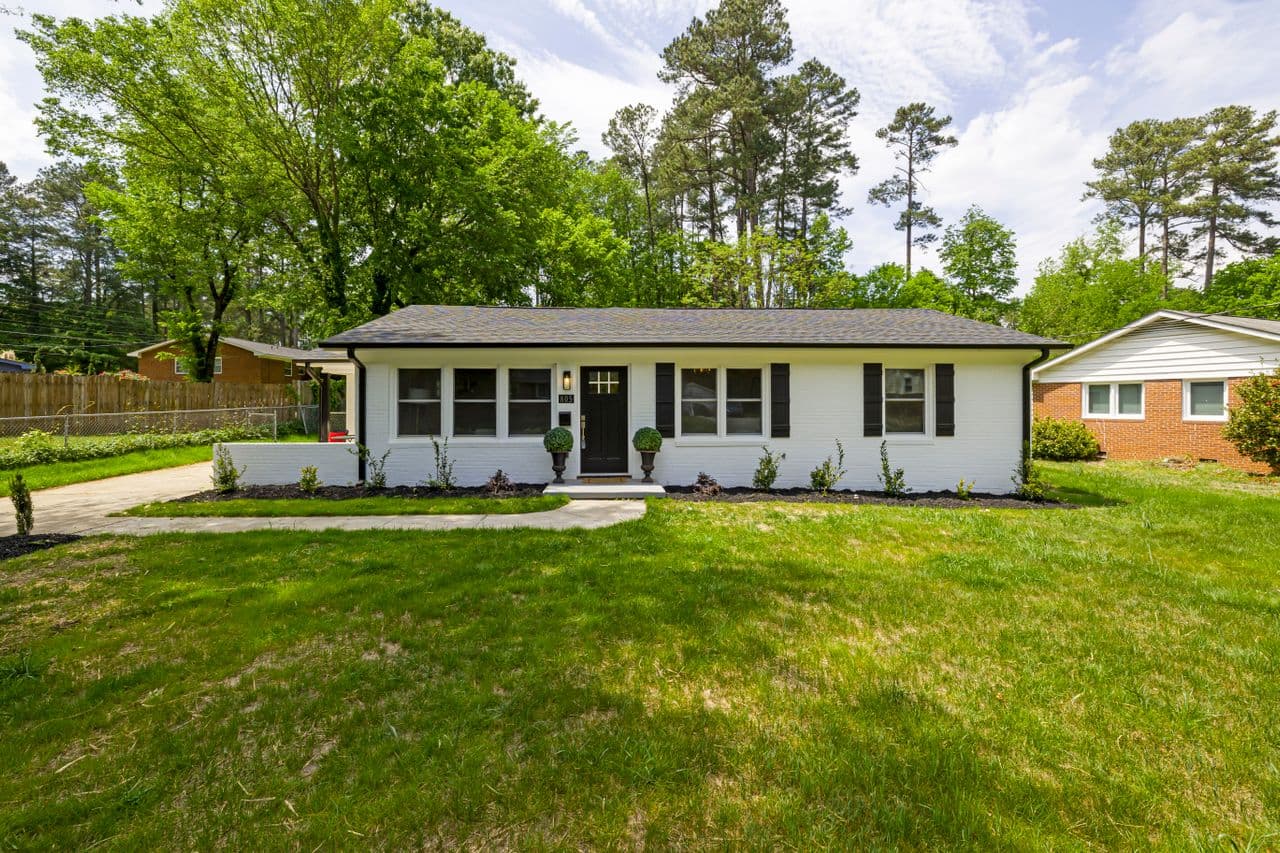
Homeownership has become increasingly difficult for millennials. In a Clever Offers survey of millennial renters and prospective buyers, 97% reported at least one barrier to buying a home. Nearly half (46%) cited homes being too expensive, while 34% said saving for a down payment was holding them back. Those figures come from a private survey rather than a census of all U.S. millennials, but they reflect a real affordability squeeze: the national median down payment was roughly $23,400, or 12.8% of the purchase price in the first quarter of 2026, and Realtor.com reported a typical down payment near $25,000 in April 2026. NAR's 2025 buyer profile reported a median down payment of 10% for first-time buyers and 19% across all buyers, and government-backed loan programs can permit materially smaller percentages.
Being priced out of a purchase today doesn't mean giving up on building wealth through real estate. Fractional real estate investing has emerged as an alternative, allowing millennials to own proportional interests in income-producing properties without the full upfront cash of a home purchase or the operational burden of managing tenants. This guide examines seven investment options for millennials in 2026, starting with mogul, a fractional real estate platform club founded by former Goldman Sachs executives that applies institutional-quality underwriting to single-family rentals.
Disclaimer: The information provided in this guide is for educational purposes only and does not constitute financial, tax, or legal advice. Always consult with a licensed professional before making any financial or investment decisions.
Key Takeaways
Fractional real estate can diversify a portfolio: Fractional ownership provides access to rental income and potential appreciation without a full property purchase. Reported results differ across platforms, properties, fees, leverage, and market conditions, and fractional real estate plays a different portfolio role than public equities
Entry points sit below a typical down payment: On mogul, the typical portfolio allocation is $17,321 per property and the average investment is roughly $10,000. By comparison, the national median down payment was about $23,400 in Q1 2026, and required amounts vary substantially by price, location, loan program, and buyer profile. That makes fractional access a practical way to start building a property portfolio
Monthly distributions can provide ongoing income: Once a property is operational and generates distributable net rental income, mogul investors receive their proportionate distribution on a monthly schedule. Amounts vary with actual property performance. Stocks and ETFs can also distribute dividend income without requiring a sale, although realizing capital appreciation generally does require selling
Diversification across asset classes can reduce concentration risk: Combining fractional real estate, index funds, and high-yield savings spreads exposure across assets with different liquidity and volatility profiles. Building a diversified real estate portfolio alongside public-market holdings is a common approach, though diversification does not guarantee a profit or prevent losses
Underwriting discipline matters: mogul reports that fewer than 1% of reviewed properties pass its diligence process, which includes market data analysis, financial underwriting, inspections, qualitative review, and investment-committee approval
1. mogul
mogul is a fractional real estate platform club that changes how millennials access property investing. It was founded by former Goldman Sachs executives Alex Blackwood and Joey Gumataotao, who bring more than $10 billion in combined institutional real estate transactional volume. Its mission is to make the world's largest wealth generator, real estate, accessible to investors, and the platform enables investors to hold proportional interests in professionally vetted and managed income-generating properties across the United States.
How Does mogul Work?
mogul acquires single-family rental properties, places each into a state-formed, property-specific LLC, and offers proportional membership interests in that LLC to investors. Investors therefore hold property-level exposure rather than an interest in a blind pooled fund, which is what enables tax items such as depreciation to be allocated on a Schedule K-1. Key highlights:
Property Selection: mogul reports that fewer than 1% of reviewed properties pass its diligence process, which includes nationwide data analysis, a market-specific buy box, inspections, qualitative review, and investment-committee approval. The buy box targets single-family homes in the $500,000 to $2 million range in high-growth secondary markets with strong price-to-rent dislocation, sourced off-market or pre-market at roughly 8% to 10% below market value with verified operating actuals
Monthly Distributions: Once a property is operational and generates distributable net rental income after expenses, fees, and reserves, investors receive their proportionate share on a monthly schedule, a more frequent cadence than many other options in the category provide. Amounts vary with actual property performance
Tax Benefits: The property-specific LLC structure may pass through depreciation and other tax benefits on Schedule K-1. Depreciation may offset rental income, subject to basis, loss-limitation, state-tax, and recapture rules. Consult a tax professional about your own circumstances
First $10k Protection: New members receive coverage for up to $10,000 in losses. If the total return on investments made in a new member's first 7 days shows a loss of $10,000 after year one, mogul covers that amount with its own balance sheet capital, subject to the promotion terms
Give $50, Get $50: Refer a friend and get $50 when they invest, subject to the referral program terms
Club Rewards: Community features like mogul Clubs distribute up to 2% in rewards to members
Reported Performance
mogul's published figures include:
18.8% average annual IRR across platform properties. On mogul's annual-returns comparison, that sits above 13.8% for single-family rentals, 9.8% for the S\&P 500, 9.3% for REITs, 5.7% for gold, and 5.2% for corporate bonds
90% of mogul investors invest a second time, and when they do, it is three times their first investment
$40 million+ in assets invested through the platform
13,000+ investors on the platform, with over 65 properties managed by mogul
Target returns of 15% to 20% levered IRR, supported by roughly 9% to 11% target NOI yield and 11% to 13% target levered yield across mid-term and short-term rentals
Blockchain Transparency
mogul records investor ownership on the Avalanche blockchain, and those records are independently verifiable. Using blockchain as a more efficient back office, mogul reduces operational costs and passes the savings on in the form of lower fees and higher returns. Each asset also has several exit avenues that mogul monitors continuously, including platform sales that syndicate equity to members at market value, private sales to inventory partners, cash-out refinancing, bulk sales to institutions, and traditional marketed sales, with the exit taken through the highest-returning route.
What Makes mogul Unique
Goldman Sachs Pedigree: Co-founder Joey Gumataotao grew Goldman Sachs' single-family rental platform from $0 to $1 billion in under 12 months with three individuals, and co-founder Alex Blackwood worked in Goldman Sachs' Real Estate Investing group and Investment Banking Division
Property-Level Fractional Ownership: Investors acquire proportional membership interests in a state-formed LLC that owns a specific property, rather than investing through a blind pooled fund
Expert Backing: mogul's About page identifies Tim Draper (early Robinhood, SpaceX, and Tesla investor), Chris Larsen (Ripple co-founder and executive chairman), and Rosa Rios (43rd U.S. Treasurer) among its backers, alongside Draper Associates, Draper B1, Draper Dragon, InterVest, Ava Labs, the Blizzard Avalanche Ecosystem Fund, and angels from J.P. Morgan, Goldman Sachs, and Carlyle
Fee-Efficient Structure: mogul reports no recurring AUM-based asset-management fee. Its 2026 materials describe a one-time upfront platform fee of up to 5% (a 3% platform fee plus a 2% setup fee where rent-ready preparation is required) and an ongoing charge equal to 2.5% of collected rent. Programmatic relationships also secure wholesale property management pricing more than 50% below market
Institutional Leverage: Interest-only loans at 65% to 75% loan-to-value, priced 100 to 150 basis points below market interest rates, so leverage works in investors' favor
Vertically Integrated Operations: Boots-on-the-ground property management teams specializing in each rental vertical, with in-house brokerage supplying pipeline
Stated Hold Period: Approximately three to ten years, with governance rights and pro-rata sale proceeds subject to the applicable operating agreement
Best For: Millennials seeking single-family rental exposure with institutional-quality underwriting, monthly distribution potential, and property-level tax reporting, without the burden of property management.
2. Fundrise
Fundrise operates as one of the longest-running real estate investment platforms, offering fund-based exposure to diversified real estate portfolios since 2012.
Key Features
$10 minimum investment for taxable accounts, $1,000 for IRAs
More than 402,000 active investor accounts as of March 31, 2026, alongside roughly 2.411 million active users
$3.4 billion in assets under management as of March 31, 2026
Fund-based allocation and management, with distribution schedules and liquidity provisions that vary by fund. Recurring auto-invest contributions are optional
IRA compatibility for tax-advantaged investing
Investment Approach
Fundrise pools investor capital into diversified funds rather than individual properties. That approach provides broad exposure, with fund-level rather than property-level selection. Reported annual advisory-client returns have varied year to year across market cycles.
Fee Structure
Fundrise charges approximately 1.0% annually on its core real estate funds (0.15% advisory fee plus 0.85% fund management fee). The Innovation Fund carries a higher 1.85% management fee, and that fund became a publicly listed closed-end fund under the ticker VCX in March 2026. Situational or fund-level expenses may also apply.
Best For: Millennials seeking a very low entry point to real estate investing with fully automated fund allocation and a long operating track record.
3. Arrived Homes
Arrived Homes provides fractional ownership in individual rental properties, with a $100 per property minimum.
Core Capabilities
$100 minimum per property investment
Approximately 984,000 registered investors, according to Arrived's website
Backed by investors including Jeff Bezos
Property-level selection allowing investors to choose specific homes
Secondary market launched in November 2025. Eligible shares generally must be fully funded and held for at least six months, and may be offered during limited monthly trading windows, subject to buyer demand. Arrived may charge up to 2.5% on purchases and up to 2.5% on sales
Investment Options
Arrived offers both individual property investments and an SFR Fund option. Individual-property dividends are generally paid monthly once a property generates distributable income, and SFR Fund dividends are also expected monthly. The SFR Fund separately offers quarterly redemption opportunities, subject to its terms and available liquidity.
Fee Considerations
Arrived charges offering-specific sourcing and asset-management fees. Current materials describe quarterly AUM fees generally ranging from 0.1% to 0.30%, plus a one-time sourcing fee that varies by offering. A 2026 SEC filing for one offering describes an expected property-disposition fee of approximately 6% to 7% of the sale price, and fee schedules differ from product to product.
Arrived presents 6% to 10% as an expected or historical total-return framework for single-family rental investments, incorporating assumptions about rental income and appreciation, rather than a platform-wide realized result.
Best For: Budget-conscious millennials who want property-level selection and the credibility of high-profile investor backing at a $100 starting point.
4. High-Yield Savings Accounts & CDs
For millennials actively saving toward future homeownership or maintaining emergency reserves, high-yield savings accounts offer principal protection within insurance limits.
Key Advantages
FDIC Insurance: Eligible deposits are generally insured up to $250,000 per depositor, per FDIC-insured bank, per ownership category. This does not mean every account or financial product is independently insured for $250,000
Immediate Liquidity: Savings accounts generally permit access without CD-style early-withdrawal penalties
Current Rates: As of early August 2026, competitive high-yield savings accounts commonly offered rates in the upper-3% to low-4% range, with selected offers reaching approximately 4.5%. Higher advertised rates may carry balance caps, activity requirements, or promotional restrictions
Minimums Vary: Many accounts have no ongoing minimum-balance requirement, while others require an opening deposit, qualifying activity, or a specified balance to earn the highest advertised APY
Emergency Fund Vehicle: A commonly cited guideline is three to six months of expenses in liquid savings before investing
Strategic Role
With 34% of surveyed millennials citing down payment savings as their primary barrier to homeownership, high-yield savings provide a practical place to accumulate funds. In early August 2026, some leading accounts paid roughly ten times the national average savings rate of about 0.38%, although rates and eligibility requirements change frequently. These accounts complement higher-return investments by holding near-term cash, while longer-horizon capital can work in income-producing real estate.
Considerations
Interest is generally taxed as ordinary income in a taxable account
Insured deposits still carry inflation and purchasing-power risk, reinvestment risk, and the possibility that balances exceed insurance limits. CDs may impose early-withdrawal penalties
Lower long-term return potential than risk assets, and cash does not carry the built-in inflation hedge that real estate has historically provided
No appreciation potential
Best For: Millennials building down payment funds, maintaining emergency reserves, or seeking principal protection for capital they may need within 1 to 2 years.
5. Index Funds & Low-Cost ETFs
Low-cost index funds are widely used as core long-term portfolio holdings because they provide broad market exposure at minimal cost.
Core Benefits
Broad Diversification: A single broad-market fund can hold hundreds or thousands of companies. VOO tracks roughly 500 companies, while FZROX reported 2,665 holdings as of June 30, 2026. This is substantial diversification within a target equity market, not across bonds, real estate, commodities, or private assets
Lowest Costs: Expense ratios can be as low as 0.00% for Fidelity's ZERO funds, while VTI and VOO each carried a 0.03% expense ratio in 2026
Tax Efficiency: Buy-and-hold investing can defer capital gains until sale, although dividends, fund distributions, and rebalancing may still create taxable income
Long-Run Performance: The S\&P 500 has produced an annualized nominal total return of roughly 10% since its 1957 inception, and about 11.5% over the 40 years ending in December 2025. Results vary substantially by period, and future returns are not guaranteed
High Liquidity: U.S. stocks and ETFs generally settle on T+1, or one business day after the trade date, following the industry move from T+2 on May 28, 2024
The Real Estate Comparison
Single-family rentals generate both rental income and appreciation, and over a 30-year hold they have historically returned roughly 190% more than the S\&P 500 with about 45% less volatility. Direct comparisons should still use a fully disclosed, consistently calculated methodology, including treatment of vacancy, maintenance, taxes, insurance, transaction costs, and reinvested income, which is one reason real estate vs stocks is rarely an either-or question. Many millennials hold both: index funds for liquidity and public-market exposure, and fractional real estate for rental income, property-level tax reporting, and diversification away from equities.
Popular Options
VTI (Vanguard Total Stock Market)
FZROX (Fidelity Zero Total Market)
VOO (Vanguard S\&P 500)
Best For: All millennials as a core portfolio holding, ideally combined with real estate exposure through platforms like mogul for diversification across asset classes.
6. Robo-Advisors
Robo-advisors provide automated investment management for millennials who prefer a largely hands-off approach.
Key Features
Automated Implementation: Robo-advisors automate portfolio implementation, rebalancing, and ongoing management based on the investor's stated goals and risk profile, using models designed and overseen by the provider's investment team. Investors still choose goals, time horizon, risk tolerance, and account type
Tax Optimization: Some providers offer automated tax-loss harvesting for eligible taxable accounts, often subject to minimums and enrollment. Fidelity Go offers it for eligible taxable accounts of at least $25,000, and Schwab requires at least $50,000 in eligible taxable assets plus enrollment. It does not apply to tax-advantaged retirement accounts in the same way
Automatic Rebalancing: Commonly offered to maintain target allocation without manual intervention
Goal-Based Planning: Set specific goals such as a house down payment on a defined timeline
Varied Minimums: Minimums range from no account-opening minimum to several thousand dollars. Fidelity Go requires about $10 to begin investing, while Schwab Intelligent Portfolios requires $5,000. Betterment may allow account opening without an investment minimum, with pricing that depends on balances and recurring deposits
Fee Structure
Robo-advisor pricing varies and cannot be reduced to a single figure:
Wealthfront: generally 0.25% annually
Betterment: generally 0.25% when qualifying balance or deposit requirements are met, otherwise $5 per month for smaller accounts
Fidelity Go: no advisory fee below $25,000, and 0.35% at or above that threshold
Schwab Intelligent Portfolios: no direct advisory fee, though portfolios maintain a cash allocation from which the provider may earn revenue
Robo-advisors often have lower minimums than full-service wealth-management programs, although minimums for both automated and human-advised services vary widely, and some advisory programs begin below $100,000.
Top Providers
Leading options include Betterment, Wealthfront, Fidelity Go, and Schwab Intelligent Portfolios. Each differs on tax optimization, account types, pricing, and investment options.
Best For: Millennials who acknowledge they won't actively manage investments and want automated allocation, rebalancing, and, where eligible, tax-loss harvesting.
7. Groundfloor
Groundfloor offers real estate debt investing with shorter stated maturities than equity-based fractional platforms.
Investment Model
$10 minimum for individual loans, available to non-accredited investors
Groundfloor reports historical annualized returns of approximately 10% for certain real estate loan cohorts. Its 2025 SEC materials reported annualized LRO returns that varied by cohort, including 11.62% for 2024, 10.76% for 2023, 9.55% for 2022, 8.12% for 2021, and 9.48% for 2020. Returns vary by vintage, grade, repayment timing, defaults, and recoveries
Terms range from roughly one month to a year or longer depending on the loan or note, and borrower extensions or workouts can affect repayment timing
Debt-based returns: contractually specified interest terms, with payment timing and ultimate recovery tied to borrower performance and collateral outcomes
Non-accredited access across its loan products
How It Differs
Unlike mogul and other equity platforms where investors hold property-level interests and participate in any appreciation, Groundfloor investors fund short-term real estate debt (primarily fix-and-flip projects) and receive interest. Interest is generally paid when the borrower repays, rather than necessarily as recurring monthly income.
Product Options
Groundfloor offers individual loan investments starting at $10 and various Note products with terms including 30-day, 90-day, and 12-month options. Certain Notes carry higher minimums, commonly $100, $1,000, or more depending on the product. Groundfloor previously offered Flywheel with a 1% management fee, and that product closed permanently to new investments and automatic reinvestment on July 7, 2026.
Best For: Millennials who can tolerate illiquidity and credit risk while seeking shorter stated maturities than many equity real estate investments. Debt investments carry credit, timing, and repayment characteristics that differ from equity ownership in a property.
Why mogul Stands Out for Millennial Investors
Institutional Expertise for Individual Investors
mogul applies an institutional-quality underwriting process developed by former Goldman Sachs executives, including nationwide data analysis, a market-specific buy box, inspections, qualitative review, and investment-committee approval. mogul reports an 18.8% average annual IRR across platform properties, which sits above the 13.8% for single-family rentals, 9.8% for the S\&P 500, and 9.3% for REITs shown on its annual-returns comparison, drawn from Federal Reserve mortgage-rate data, the Case-Shiller Home Index, NAREIT performance, and Bloomberg public-market data. Return figures across fractional platforms are calculated over different periods with different fee, leverage, and valuation assumptions, so like-for-like comparison requires a consistent methodology.
Property-Level Ownership with Real Tax Reporting
Unlike fund-based platforms, mogul's structure gives investors proportional membership interests in a state-formed LLC that owns a specific property. That structure may pass through depreciation and other tax items on Schedule K-1, which REIT shareholders generally do not receive, and how depreciation works is one of the clearest advantages of direct property exposure. The availability and usefulness of those deductions depend on basis, loss-limitation rules, income, jurisdiction, recapture, and individual circumstances, so investors should consult a tax professional.
Monthly Cash Flow Potential Without the Headaches
Traditional landlording means 3 AM tenant calls, maintenance emergencies, and management stress. mogul handles property management, tenant coordination, maintenance, and operations, which is what makes real estate investing more accessible and headache-free. Once a property is operational and generates distributable net rental income, investors receive proportionate distributions on a monthly schedule, with amounts reflecting actual property performance. You can explore current properties on the platform.
Built-In Risk Mitigation
mogul capitalizes future costs at the property level, including 12 months of operating reserves per asset covering maintenance, vacancy, insurance payments, and closing costs. It carries property and business interruption insurance, so market rent continues to come in even while a property is being repaired, and it uses economies of scale with inventory partners to obtain wholesale property management pricing. New members also receive coverage for up to $10,000 in losses on qualifying investments made within their first 7 days if the investment shows a loss after year one, subject to the program's terms. Full terms are available in mogul's disclosures.
Transparency Through Technology
mogul records investor ownership on the Avalanche blockchain, and those records are independently verifiable. Its dashboard provides valuation, rental distribution, and return-projection information, with fair-market values updated monthly using third-party appraisal-level data. Learn how it works to understand the full process.
Investor Reinvestment Behavior
mogul reports that 90% of its investors invest a second time, and when they do, it is three times their first investment. That pattern reflects how members experience the platform after their first property, from monthly distributions to property-level reporting.
For millennials priced out of homeownership, mogul offers a route to building wealth through real estate with selective property underwriting, monthly distribution potential, and property-level tax reporting. You can also book a call or browse the help center for more detail.
Disclaimer: The information provided in this guide is for educational purposes only and does not constitute financial, tax, or legal advice. Always consult with a licensed professional before making any financial or investment decisions.
Frequently Asked Questions
What is fractional real estate investing and how does it work for millennials?
Fractional real estate investing allows multiple investors to hold interests in a single property. Platforms like mogul acquire properties, place them into property-specific LLCs, and offer proportional membership interests. Investors may receive proportionate rental income distributions when a property generates distributable net income, and participate in any appreciation, without a full purchase or tenant management. Commercial market-research estimates of the sector's size vary substantially and are third-party projections rather than an authoritative market census. DataIntelo valued the fractional real estate platform market at approximately $4.2 billion in 2025, projecting $14.8 billion by 2034. MarketIntelo's larger $8.2 billion figure covers the broader fractional ownership market, which includes aircraft, yachts, vehicles, and art alongside real estate (estimated at roughly 48.5% of that total), so the two numbers are not interchangeable.
How do fractional real estate returns compare to traditional stock market investments?
They are not directly comparable without a consistent methodology. The S\&P 500 has returned roughly 10% annually since 1957 and about 11.5% over the 40 years ending in December 2025 on a nominal total-return basis. mogul reports an 18.8% average annual IRR across its properties, but IRR, annual total return, dividend yield, realized results, and estimated values are different measures, calculated over different periods with different fee, leverage, and valuation assumptions. Real estate has historically delivered its returns with less variability: from 1993 to 2023, single-family rentals produced a 13.8% IRR with a 2.3% standard deviation, versus 9.8% and 4.2% for the S\&P 500. Private real estate also generally involves longer holding periods than publicly traded stocks, and it has historically shown low correlation with stocks and bonds, which is part of why real estate works as a portfolio diversifier.
Can I invest in real estate with limited funds as a millennial?
Yes. Fractional access lets millennials build real estate exposure without the full cash of a home purchase. On mogul, the average investment is roughly $10,000 and the typical portfolio allocation is $17,321 per property, both below the national median down payment of about $23,400 in Q1 2026. Entry points across the category vary, though a minimum on its own says little about underwriting quality or return potential: if an asset is targeting institutional-quality returns, the more useful questions are how the property was sourced, how it is financed, and who operates it. For millennials looking to invest with little money, fractional platforms remove the mortgage-qualification and large-down-payment barriers that apply to a direct purchase.
What are the main risks of fractional real estate investing?
Considerations include holding period, platform and sponsor experience, fees, leverage, valuation practices, and broader real estate investing risks tied to market conditions. Private real estate is generally designed for multi-year ownership, and it does not carry the deposit insurance that applies to a savings account. mogul addresses these considerations directly at the asset level: it capitalizes 12 months of operating reserves per property, carries property and business interruption insurance so market rent continues while a property is repaired, negotiates wholesale property management pricing through its inventory partners, and continuously monitors several exit avenues so each asset can be sold or refinanced through the highest-returning route. New members also get First $10k protection, with mogul covering up to $10,000 in losses on qualifying first-week investments. Its stated hold period is approximately three to ten years.
Should I choose fractional real estate or index funds?
In practice, many millennials use both. Index funds provide liquidity and diversified public-equity exposure at very low cost, while fractional real estate adds rental income potential, participation in any appreciation, and property-level tax reporting through Schedule K-1 in structures like mogul's. Diversification does not guarantee a profit or prevent losses, but combining assets with different liquidity and volatility profiles remains a common approach, and many millennials continue to view real estate as a potential wealth-building asset even when direct homeownership is financially difficult. Use mogul's investment property calculator to analyze projected income, ROI, comparable properties, and base, bear, and bull scenarios for a specific U.S. address.